
Research SARMs, nootropics and lab compounds
Research SARMs, nootropics and lab compounds
Plain-English guides to MK-677, RAD-140, Ostarine, Cardarine and LGD-4033, written by the Chemyo Labs team.
Each guide covers where a compound came from, what the published research looked at, and how we supply it.
What Merck found, how it works on the ghrelin receptor, and how to buy it as powder or liquid.
Radius Health’s SARM, the preclinical data and the Phase 1 trial, plus our two formats.
The best documented SARM, from GTx’s trials to choosing powder or solution.
Why GSK dropped it, why labs still use it, and how it pairs with SARMs.
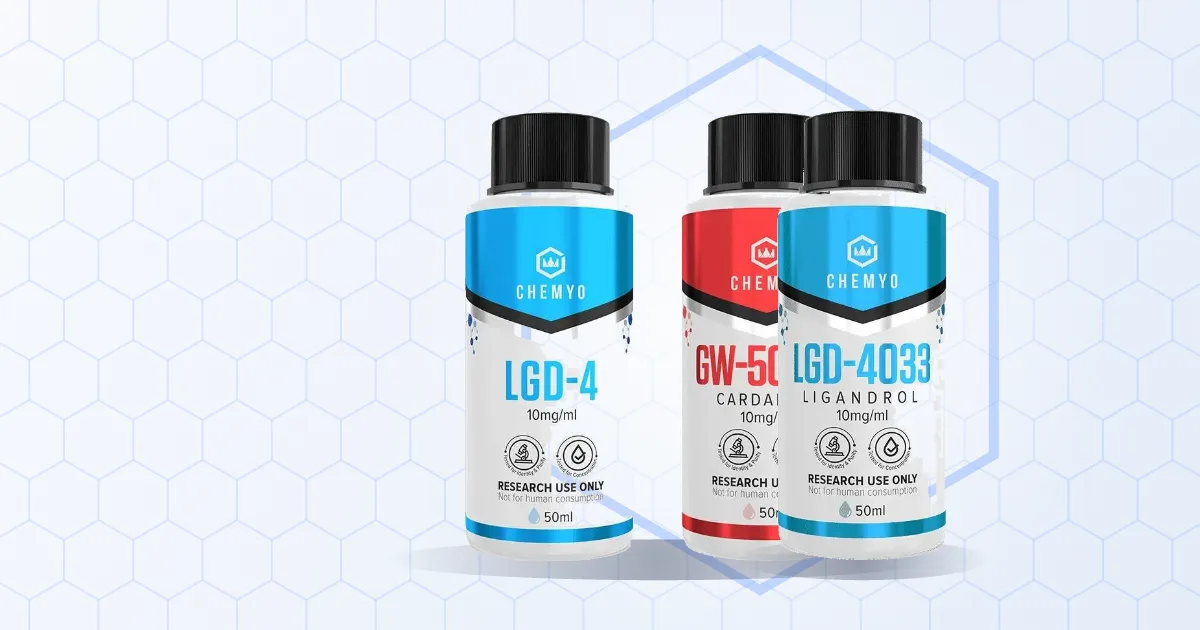
Ligand’s SARM, the 2013 Phase I study and how our solution is made up.
The SARMs research blog started with the five compounds people ask us about most. Each guide is long enough to be useful but short enough to read in one sitting, usually around ten minutes. They’re organized the same way, so once you’ve read one, you’ll know where to find things in the others.
We write about the compounds we actually sell. Each guide sticks to what’s on the record: who developed the compound, what the trials or animal studies measured, and what never got past early research. Where a paper is famous for the wrong reasons, we say so.
Each guide also links to the matching product pages, so you can go from reading about a compound to checking its spec table and lab report in one click.
You won’t find dosing advice here. Everything we sell is for laboratory research only, and the guides are written for people designing that research.
Short version: we read the papers. Each guide names the company or university behind a compound and the studies people actually cite. If the evidence is mostly in rats or cell culture, we say that plainly, because it changes how much weight a result can carry.
We also link to the original sources where we can, usually PubMed or the company’s own trial listing, so you can check our summary against the paper yourself.
We plan to add guides to the SARMs research blog on more of the compounds we stock, starting with the nootropics and the newer metabolic compounds like SLU-PP-332. We update the guides when something new is published. Got a correction? Email us. We’d rather fix a mistake than leave it up.
If you’re comparing compounds before you place an order, the guides should save you a few hours of reading abstracts. If you already know the literature, they’re a quick way to check our formats, carriers and concentrations against what your protocol needs.
The guides are written for people planning lab work: students, independent researchers and small labs comparing compounds before they order. We assume you know what a receptor is, but we explain the specifics of each compound from scratch.
Every guide on the SARMs research blog includes a short FAQ, a worked concentration example where it helps, and links to PubMed searches so you can read the source papers yourself.
When you’re ready to order, every compound in these guides is in stock in our SARMs for sale range or the metabolic research section.
Every compound covered on this blog is in stock at Chemyo Labs.